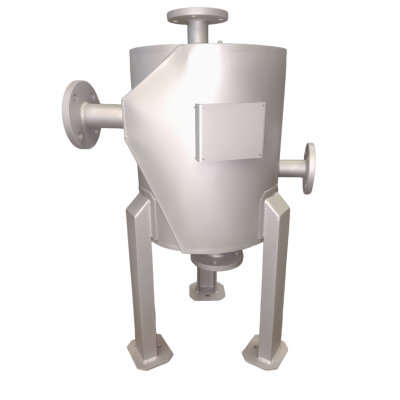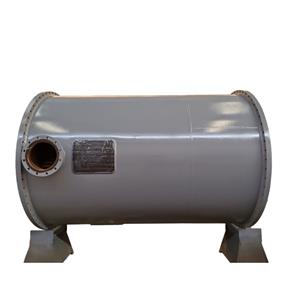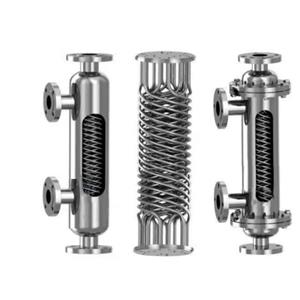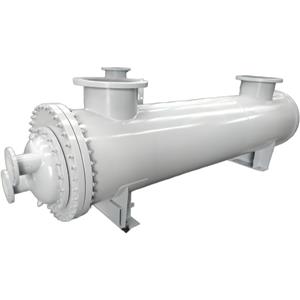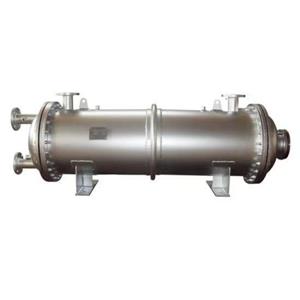
Industrial Spiral Plate Heat Exchanger Welded Spiral Type

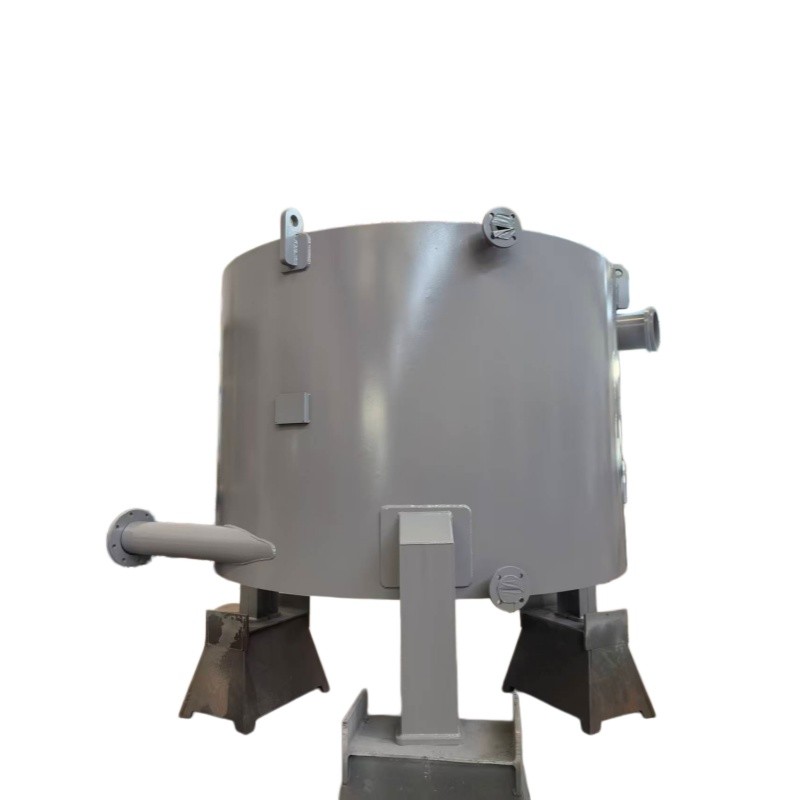
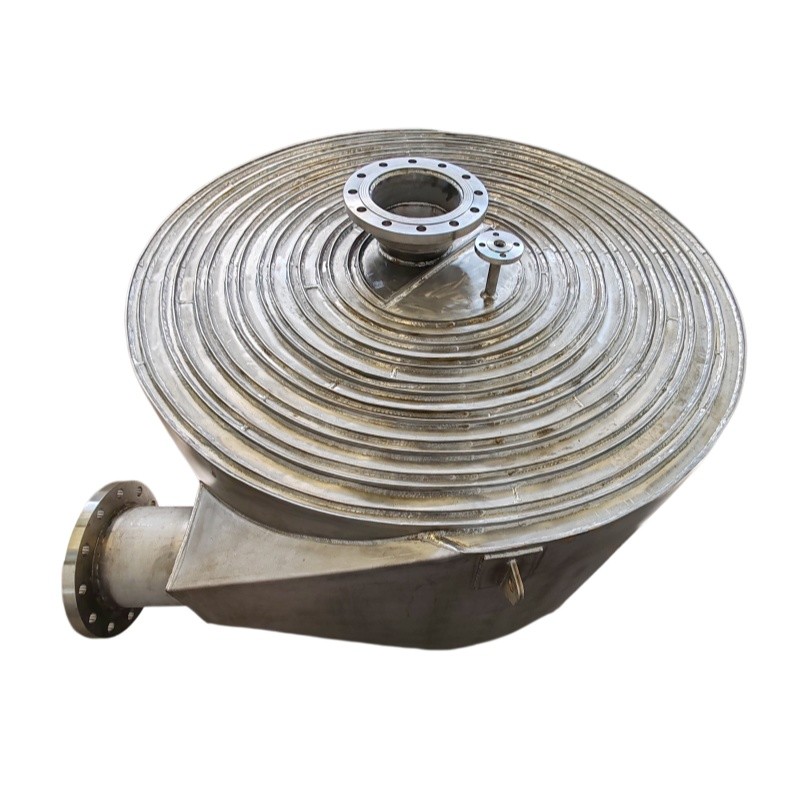
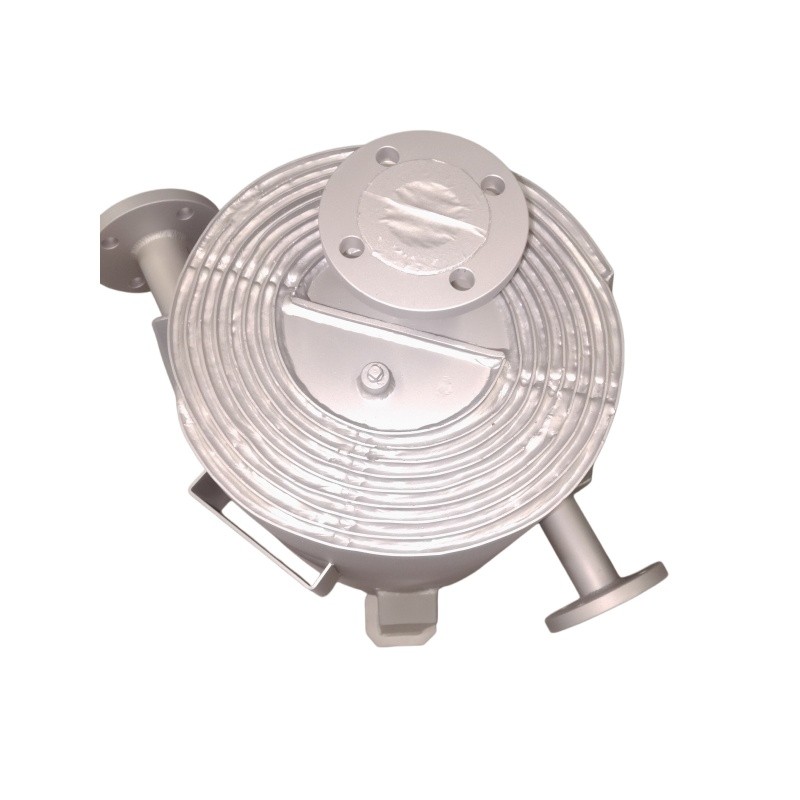
- OEM/ODM
- CHINA
1. Dual-channel welded design isolates flammable process media from utility streams—no cross-contamination risk.
2. Rated for 100°C and 1.0 MPa—covers most refinery cooling duties without high-spec vessel upgrades.
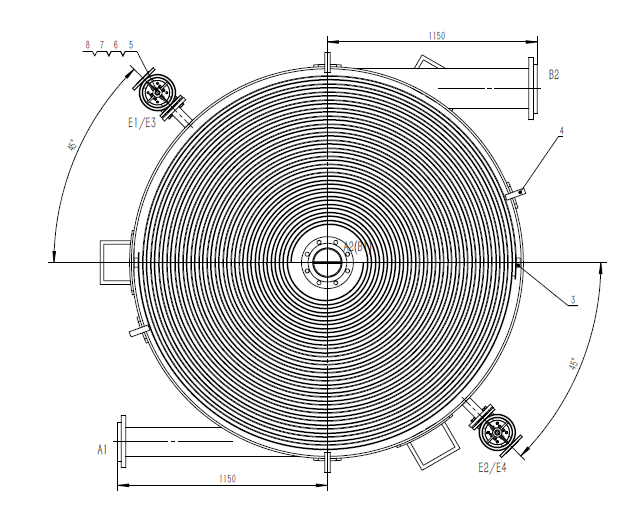
3. Asymmetric 16mm/20mm channels maintain optimal flow velocity—maximizes heat transfer while resisting fouling and blockage.
4. One 250 m² unit replaces multiple parallel shell-and-tube exchangers—fewer piping connections, fewer leak paths, smaller footprint.
Industrial Spiral Plate Heat Exchanger Welded Spiral Type
Parameter Category | Channel A | Channel B |
Medium | Lean Oil | Cooling Water |
Design Temperature | 100°C | 100°C |
Flow Rate | -- | -- |
Design Pressure | 1.0 MPa (3) | 1.0 MPa (3) |
Working Pressure | 0.8 MPa | 0.8 MPa |
Test Pressure | 1.3 MPa (3) | 1.3 MPa (3) |
Channel Spacing | 16mm | 20mm |
Main Body Material | Q235B (4mm) | Q235B (4mm) |
Heat Transfer Coefficient | -- | -- |
Heat Transfer Area | 250 m2 | 250 m2 |
Why Your Cooling System Needs Re-Selection — Three Overlooked Decision Pain Points
Pain Point 1: High-Temperature Lean Oil Cooling Load Exceeds Capacity, Traditional Shell-and-Tube Equipment Breaks the Space Budget
In petroleum refining and coal chemical processing, lean oil typically exits the absorption tower at temperatures approaching 100°C and requires efficient cooling within limited plant footprint. Traditional shell-and-tube heat exchangers rely on tube-wall conduction with low Log Mean Temperature Difference (LMTD) utilization, often requiring 2–3 times the floor area to achieve the same heat duty. For refining projects in the Middle East, where land is scarce and expansion costs are prohibitive, this translates into additional civil engineering investment and piping installation costs.
Solution: This Spiral Plate Heat Exchanger features a spiral flow-channel design in which hot and cold media flow in pure counter-current through independent channels of 16 mm and 20 mm. The LMTD utilization is significantly higher than that of shell-and-tube designs. A 250 m² heat transfer area is compacted into a cylindrical shell, delivering 2–3 times the heat transfer density per unit volume of conventional shell-and-tube equipment — directly reducing plant footprint and civil construction costs. For Middle Eastern B2B buyers, selecting this industrial spiral plate heat exchanger means upgrading cooling capacity without expanding the facility.
Pain Point 2: Cooling Water Side Fouling and Blockage Cause Production Loss During Cleaning Shutdowns
Cooling water in the Middle East is often seawater or high-hardness surface water with elevated calcium and magnesium ion levels, making carbonate scale deposition on heat transfer surfaces highly likely. Conventional gasketed plate heat exchangers have plate gaps of only 3–5 mm; once fouling occurs, the flow channels narrow rapidly, pressure drop spikes, and an unplanned cleaning shutdown becomes unavoidable. For continuously operating refining units, every unplanned shutdown represents tens of thousands of dollars in lost production.
Solution: The B channel (cooling water side) of this industrial spiral plate heat exchanger is designed with a 20 mm spacing — far wider than conventional plate heat exchangers. The wide flow path allows suspended solids, sediment, and microbial slime carried by cooling water to pass through without depositing, structurally extending the fouling cycle. Additionally, centrifugal forces generated within the spiral channels induce secondary flows that continuously scour the heat transfer walls, creating a "self-cleaning" effect that further extends cleaning intervals. When maintenance is genuinely required, this Spiral Plate Exchanger allows mechanical cleaning by removing the end cover — no disassembly of the core heat transfer unit is necessary.
Pain Point 3: Seal Face Leakage Under High-Pressure Conditions Poses Combined Safety and Environmental Risks
Lean oil is a flammable medium. When operating at a working pressure of 0.8 MPa, any seal failure can result in hydrocarbon vapor leakage, fire hazards, or VOC emission exceedance. Gasketed plate heat exchangers depend on rubber or asbestos gaskets for sealing, which carry aging and creep risks under high temperature and pressure — particularly in Middle Eastern summer conditions where ambient temperatures exceed 50°C, drastically shortening gasket service life.
Solution: This unit is a welded spiral plate heat exchanger. Its core heat transfer element is sealed by a welded structure with zero gasket-aging risk. With a design pressure of 1.0 MPa and factory-verified hydrostatic testing at 1.3 MPa, the safety margin reaches 62.5%. Channel A (lean oil side) and Channel B (cooling water side) are completely physically isolated, eliminating cross-contamination risk even under extreme operating conditions. This Spiral Type Heat Exchanger meets the refining industry's zero-leakage requirements at the inherent-safety level.
Real-World Application Scenarios — How the Equipment Performs On-Site
Real-World Application Scenarios — How the Equipment Performs On-Site
Scenario 1: Absorption Oil Cooling Unit at a Middle Eastern Refinery
At the bottom of an absorption tower in a refining facility along the Persian Gulf, lean oil is withdrawn at approximately 95°C and must be cooled below 40°C before being recycled back to the tower. The plant is located on the edge of a desert, with summer ambient temperatures consistently above 45°C, and cooling water is supplied by a seawater desalination plant — high in salinity and elevated in temperature. This industrial spiral plate heat exchanger is installed on a compact foundation beneath the pipe rack. Channel A carries lean oil (16 mm spacing ensuring adequate oil-side velocity), while Channel B carries cooling water (20 mm spacing resisting seawater fouling). After commissioning, the lean oil outlet temperature remained stable within design values, no significant pressure drop increase was observed, and the interval before the first chemical cleaning exceeded 18 months.
Scenario 2: Process Medium Cooling at a European Chemical Park
In a solvent recovery unit at a chemical park in Western Europe, process media require cooling within a closed loop. Because the medium is slightly volatile, plant safety regulations prohibit the use of gasket-sealed heat transfer equipment. The fully welded construction of this Spiral Plate Heat Exchanger satisfies this requirement, and its 1.0 MPa design pressure matches the unit's piping network classification. The equipment is horizontally mounted within a steel structure frame, with inlet and outlet flanges connecting directly to existing piping — no additional support modifications required.
Scenario 3: Solvent Condensation in Pharmaceutical Intermediate Production
In GMP-compliant pharmaceutical manufacturing plants, solvents must be condensed and recovered without any risk of cross-contamination. This heat exchanger employs a fully welded design, eliminating the risk of gasket extractables migrating into the process stream. Its robust Q235B carbon steel body and 1.3 MPa hydrostatic test verification provide assurance of vessel seal integrity under continuous production conditions.
FAQ
Q1: Can this Spiral Plate Heat Exchanger be customized to my operating conditions?
Yes. The current specification is a standard model (250 m², Q235B, 1.0 MPa design pressure). Customizable parameters include: heat transfer area (adjusted based on thermal duty calculations), channel spacing (optimized for medium viscosity and fouling tendency), main body material (options include 304/316L stainless steel, titanium, and others for corrosive media), design pressure and temperature ratings, and inlet/outlet flange specifications and orientations. For customization requests, please provide a complete process data sheet (medium flow rate, inlet/outlet temperatures, allowable pressure drop, medium composition). Our engineering team will perform thermal calculations and issue a formal selection proposal.
Q2: What is the lead time and shipping method?
The standard model (250 m², Q235B) typically has a manufacturing lead time of 30–45 working days (subject to the production schedule at order confirmation). The equipment is large in volume (approximately 1.5–2.0 m in diameter, 3–4 m in length) and is typically shipped by sea in Flat Rack (FR) or Open Top (OT) containers. Destination ports include major Middle Eastern hubs (such as Jebel Ali, Dammam, Jeddah) and European basic ports. Factory packaging includes rain and moisture protection, blind flange sealing, and equipment base securing. CIF or DDP trade terms can be negotiated during the quotation stage.
Q3: How is the welded-structure equipment maintained and cleaned?
Maintenance of this welded spiral plate heat exchanger is organized in three tiers:
Routine Maintenance: Monitor inlet/outlet pressure drop and temperature changes. Schedule cleaning when pressure drop rises more than 30% above the design value.
Cleaning-in-Place (CIP): Connect a cleaning circuit through the inlet/outlet flanges and circulate a mild acidic cleaning agent (such as sulfamic acid). Suitable for light fouling — no equipment disassembly required.
Mechanical Cleaning: Remove the equipment end cover (removable end cover design) and flush the spiral channel surfaces with a high-pressure water jet. Suitable for heavy fouling or biofouling blockage.
The fully welded structure means the core heat transfer element never needs disassembly, and the maintenance workload is far lower than that of gasketed plate heat exchangers.
Q4: Do you provide pressure vessel certification for products exported to the Middle East and European markets?
Yes. We regularly export to these regions and can provide the ASME certification stamp (for North America), CE marking under PED (for Europe), and GOST certification (for CIS countries). All products ship with a complete documentation package, including data sheets, fabrication drawings, and test certificates.