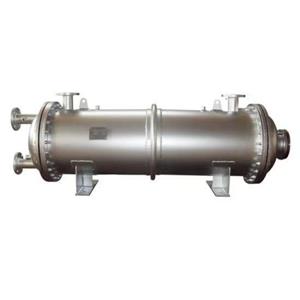
Industrial Air Cooled Heat Exchanger Air Fin Fan Cooler

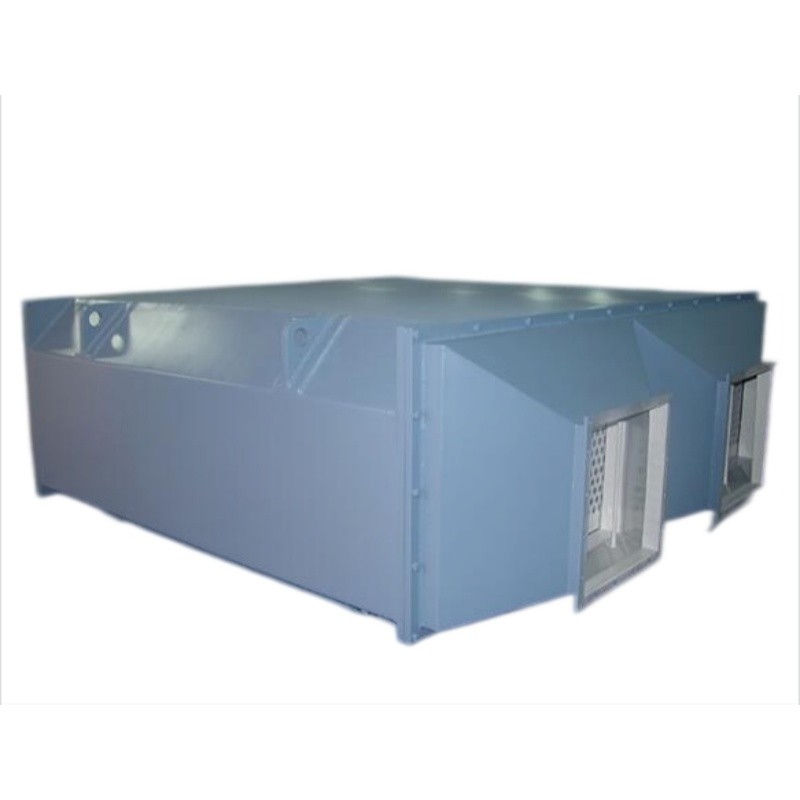
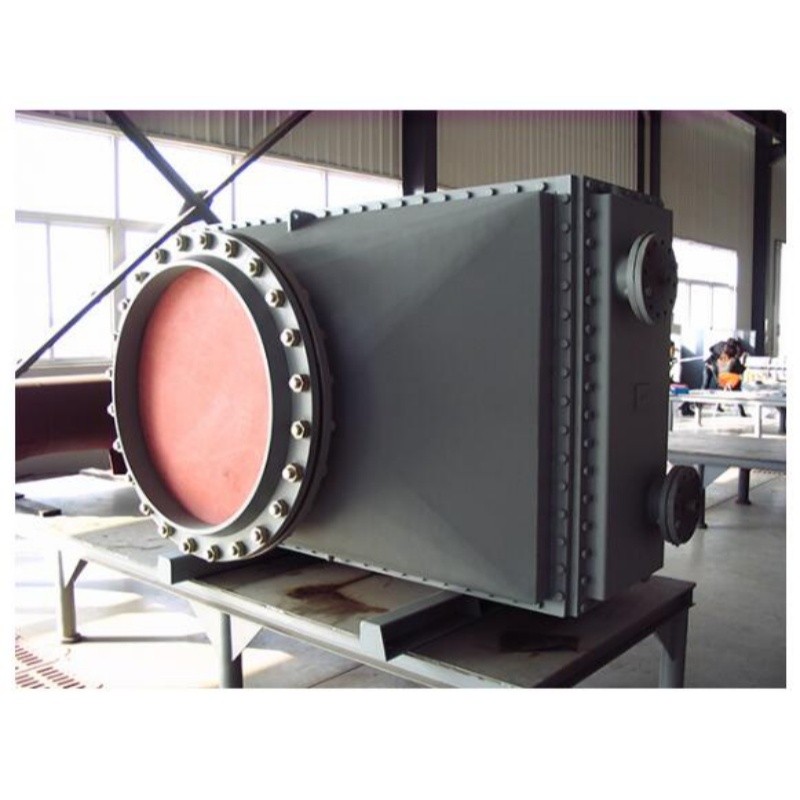
- OEM/ODM
- CHINA
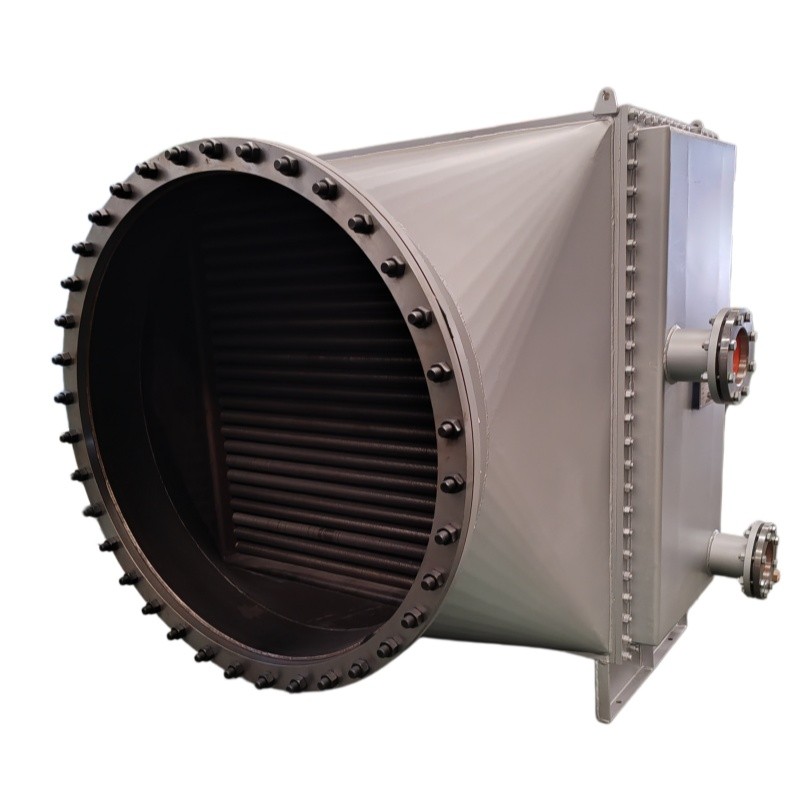
As a high-efficiency air-cooled exchanger, this unit takes atmospheric air as the primary heat transfer medium, requiring no cooling water system construction or operation. It completely eliminates water resource consumption and auxiliary equipment energy consumption, with structural optimization tailored for arid, high-temperature industrial environments to achieve superior environmental adaptability. Equipped with staged gradient heat transfer technology, it realizes hierarchical heat dissipation for compressed air and process media, delivering higher energy utilization and more economical long-term operation.
Industrial Air Cooled Heat Exchanger
Product Specifications

User Pain Points & Targeted Technical Solutions
Pain Point 1: Severe water resource consumption and high supporting system operation costs in water-cooled cooling systems
Conventional process and oil cooling solutions rely predominantly on water-cooled heat exchange technology, which requires a complete set of auxiliary circulating equipment, including water pumps, cooling towers, storage tanks, and supporting piping. For Middle Eastern manufacturing facilities operating in water-deficient regions, long-term water procurement, system operation, and pipeline maintenance create substantial recurring operational costs. Additionally, circulating water systems are prone to scaling, pipeline clogging, and leakage under sustained high-temperature working conditions, which disrupts production stability, increases line failure rates, and shortens continuous production cycles.
Corresponding Solution: Our air cooler series adopts air as the primary heat transfer medium, eliminating reliance on cooling water and full-scale water circulation infrastructure. Equipped with high-performance fin heat exchange components, the unit enables staged gradient heat transfer between inter-stage compressed air and process media. This structural design completely cuts down water resource consumption, removes upfront investment in cooling water systems, and reduces long-term pipeline maintenance expenditure, making it perfectly suited for arid, water-scarce industrial environments across the Middle East.
Pain Point 2: Ordinary heat exchange equipment has unstable sealing performance and low heat transfer efficiency under long-term high-load operation
Commercially available generic inter-stage heat exchangers for gearbox centrifuges adopt simplistic assembly structures that suffer from structural loosening and seal degradation after prolonged high-pressure and high-temperature operation. Compromised sealing integrity causes leakage of process media and compressed air, which degrades heat transfer efficiency, destabilizes oil and process medium cooling performance, and impairs the operational precision and service life of matched gearbox centrifuge units. Furthermore, standard equipment features single-stage heat transfer mechanisms that cannot support gradient heat dissipation, resulting in uneven cooling and low energy utilization efficiency.
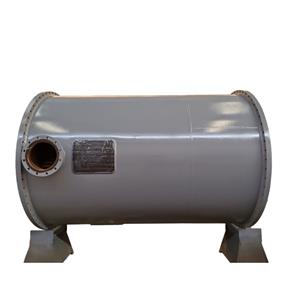
Corresponding Solution: This custom air-cooled exchanger adopts a standardized integrated core assembly process. The fully assembled and performance-tested core module is integrally inserted into the equipment shell, followed by precision installation and sealing of front and rear end covers. This optimized structure enhances overall structural rigidity and sealing tightness, effectively preventing medium leakage induced by operational vibration and thermal aging. By supporting staged gradient heat exchange between inter-stage compressed air and process cooling media, the equipment achieves hierarchical, high-efficiency heat transfer and substantially improves overall thermal exchange performance.
Pain Point 3: Complex disassembly and maintenance of traditional heat exchange equipment, high later operation and maintenance costs
Most conventional industrial heat exchangers feature fully welded integrated structures that complicate disassembly, inspection, and component replacement. Issues such as fin dust accumulation, pipeline blockage, and component aging require professional technical support and lengthy downtime for maintenance, interrupting continuous production operations. For large-scale petrochemical and coal chemical enterprises with multi-line production layouts, frequent equipment maintenance generates substantial labor costs and significant production outage losses.
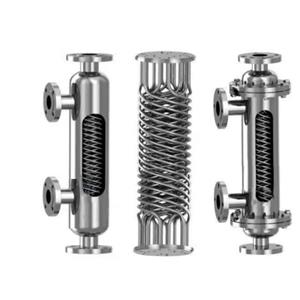
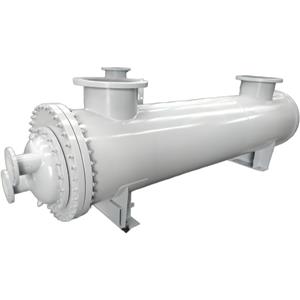
Corresponding Solution: Our fin fan cooler utilizes a modular split assembly design, with independently detachable structures for the equipment shell, heat exchange tube bundle, fin assembly, and end covers. The standardized structural layout simplifies daily dust cleaning, internal fault inspection, and partial component replacement. On-site operators can complete routine maintenance and periodic overhauls without heavy professional equipment, drastically shortening maintenance cycles, reducing reliance on specialized technicians, and lowering long-term operational and maintenance costs.
Real Industrial Application Scenarios
Scenario 1: Petrochemical Plant Process Medium Cooling
Continuous petrochemical production requires real-time cooling of various process media and oil products via gearbox centrifuge units to stabilize separation and purification workflows. Most Middle Eastern petrochemical bases are located in arid, water-deficient regions where traditional water-cooled systems cannot support low-cost long-term operation. Our industrial air cooled heat exchanger adopts air gradient heat transfer technology to efficiently cool high-temperature process media and industrial oil, featuring reliable sealing performance and zero medium leakage. It requires no cooling water support, enabling stable long-term operation in high-temperature outdoor industrial environments and ensuring uninterrupted, high-efficiency production for petrochemical lines.
Scenario 2: Coal Chemical Industry High-Load Production Heat Exchange
Coal chemical production is characterized by high operational loads, high medium temperatures, and complex corrosive working conditions, requiring matched inter-stage heat exchange equipment to withstand sustained high-pressure and high-frequency operation. This equipment can be customized with anti-corrosion stainless steel shells, high-performance heat transfer tubes, and anti-oxidation coated aluminum fins to resist complex chemical corrosion and high-temperature aging. The integrated assembly structure maintains consistent and efficient heat transfer performance under high-load conditions, resolving the low efficiency and high failure rate pain points of traditional heat exchange equipment and meeting the rigorous heat exchange standards of high-capacity coal chemical production lines.
Scenario 3: Water-Scarce Industrial Zone Water-Cooled Equipment Replacement
Industrial parks across the Middle East face universal water resource constraints, leading to excessive operational and maintenance costs for conventional water-cooled heat exchange systems. For old production line renovation and new project construction in water-scarce zones, our air cooler series serves as an optimal alternative to traditional water-cooled heat exchangers. By completely removing the need for cooling water circulation infrastructure, it drastically cuts water consumption and system operational costs. With simple maintenance logic and stable operational performance, it fully adapts to the heat exchange demands of gearbox centrifuge supporting systems in water-deficient industrial areas.
FAQ
Q1: Can the equipment realize personalized customization according to the actual working conditions of the production line?
Answer: Yes. All our air fin cooler units support full-condition customized configuration. We tailor equipment pressure resistance, temperature tolerance, and diameter specifications (DN500-DN4000), as well as independently match shell materials, heat transfer tube materials, and fin materials according to customers’ on-site operating temperatures, working pressure, medium properties, and production load. All customized parameters are strictly aligned with actual on-site working conditions to achieve perfect matching with gearbox centrifuge systems, avoiding performance redundancy or insufficient adaptation.
Q2: What is the core advantage of air cooling mode compared with traditional water cooling mode?
Answer: Firstly, the air cooling mode of the air-cooled exchanger completely eliminates dependence on cooling water resources and removes the cost of cooling water system construction and operation, making it highly economical for water-scarce Middle Eastern regions. Secondly, air cooling systems feature streamlined structures with fewer auxiliary devices, effectively avoiding scaling, clogging, and other common faults of water circulation pipelines to lower overall failure rates. Thirdly, air-cooled equipment simplifies routine maintenance, eliminating regular pipeline cleaning and water quality treatment work to reduce long-term operational costs. It achieves comprehensive water-saving, energy-saving, and cost-saving effects while meeting standard heat exchange requirements.
Q3: How to ensure the sealing stability and heat exchange efficiency of the equipment in long-term high-temperature operation?
Answer: Structurally, the equipment adopts factory-integrated core assembly and integral shell insertion technology with high structural fitting accuracy and superior overall sealing performance, effectively preventing medium leakage caused by operational vibration and long-term thermal aging. In terms of material configuration, high-temperature and corrosion-resistant stainless steel tubes, copper alloy heat transfer components, and anti-oxidation coated fins are optional for harsh working conditions. Supported by staged gradient heat transfer design, the equipment realizes full-scale hierarchical heat exchange between air and process media, sustaining stable and high-efficiency thermal performance under prolonged high-temperature and high-load operation.
Q4: Is the later daily maintenance of the equipment difficult? What is the maintenance cycle?
Answer: Our fin fan cooler adopts a fully detachable modular structure for all core components. Routine daily maintenance mainly includes fin dust cleaning and regular sealing component inspection, which can be completed by on-site operators without professional technicians or specialized equipment. The recommended basic maintenance cycle is one month under conventional working conditions, with simple and efficient operation that does not disrupt continuous production. Compared with traditional integrated heat exchange equipment, it improves maintenance efficiency by over 60% and delivers prominent long-term maintenance cost advantages.
Q5: What industrial fields and media are the equipment mainly applicable to?
Answer: This series of industrial air cooled heat exchanger is professionally matched with gearbox centrifuge systems, widely applied in petrochemical and coal chemical industrial scenarios. It provides efficient cooling for conventional industrial oil products and diverse process media, with flexible parameter and material customization to adapt to non-corrosive and mildly corrosive media. Capable of stable operation in high-temperature, arid, and other harsh working environments, it serves as the ideal replacement for traditional water-cooled heat exchangers in water-scarce industrial zones.