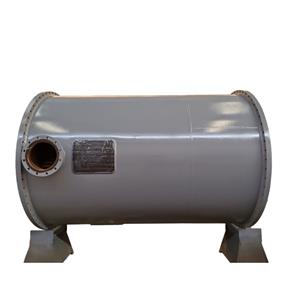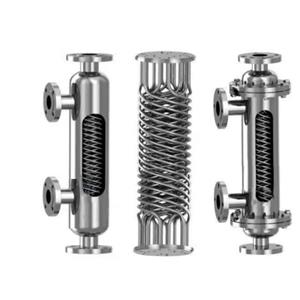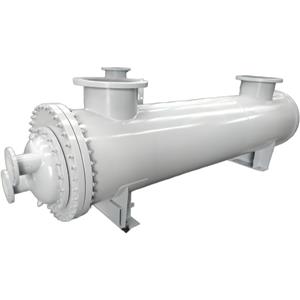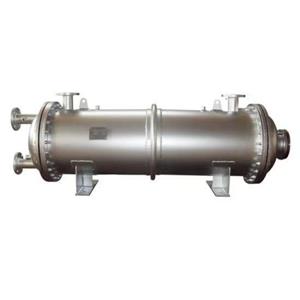
Why High-Efficiency Tank Heat Exchangers Outperform Plate Heat Exchangers
As air source heat pump technology gains wider adoption, the heat exchanger acts as the "heart" of the entire system. Its performance directly determines the unit’s energy efficiency, service life and user experience. Plate heat exchangers and high-efficiency tank heat exchangers are two mainstream solutions on the market. While plate heat exchangers once won popularity for their light weight and low cost, high-efficiency tank heat exchangers have become the superior choice in the air source heat pump industry, boasting overwhelming overall advantages in long-term practical applications.
The core function of a heat exchanger is to deliver continuous and stable heat exchange under complex water quality and extreme temperature conditions. A plate heat exchanger is assembled by stacking multiple thin stainless steel sheets. Though its compact design saves space, it comes with two inherent drawbacks.
First, stainless steel is highly sensitive to water quality. Hard water or tiny sediment can easily cause scaling and blockage within its narrow millimeter-scale channels. Once clogged, heat transfer efficiency drops sharply and power consumption surges. Professional disassembly and cleaning are time-consuming and costly, bringing great trouble to users.
Second, it has poor frost resistance. In winter shutdowns or cases of inadequate anti-freezing protection, residual water between plates freezes and expands, cracking the plates instantly and triggering a critical failure that disables the whole unit. Prone to both clogging and freezing damage, plate heat exchangers frequently appear on after-sales repair orders in frigid northern regions and areas with poor water quality. Their hidden costs far exceed customers’ initial expectations.
In sharp contrast to the fragile plate type, high-efficiency tank heat exchangers are engineered for harsh working conditions from material selection to structural design. Made of high-purity copper, its thermal conductivity reaches 401W/(m·K), more than 25 times that of stainless steel (approx. 16W/(m·K)). This allows the high-efficiency tank to capture heat rapidly under identical conditions and greatly improve the heat pump’s COP (Coefficient of Performance). More importantly, copper features a naturally smooth and antibacterial surface. Combined with its wide internal flow channels, limescale and sediment cannot attach and will be flushed away with water, fundamentally eliminating clogging risks. For freeze protection, copper’s excellent ductility and tensile strength absorb internal stress when ice expands, avoiding the fatal cracking and permanent failure common to plate heat exchangers. Choosing a high-efficiency tank heat exchanger means equipping your heat pump with a powerful, clean and freeze-proof heart.
Admittedly, thanks to solid pure copper construction and robust volume, high-efficiency tank heat exchangers carry a slightly higher upfront cost than plate types. However, this is a wise long-term investment. The larger size provides ample heat exchange area and optimized fluid routing, resulting in lower electricity bills year-round and reliable operation for over a decade. In comparison, the low price of plate heat exchangers is merely an entry cost. Subsequent high expenses for cleaning, repairs, downtime and premature replacement turn them into a continuous financial burden.
In summary, with all-round superior strengths including freeze resistance, durability, anti-clogging performance, powerful heat transfer and stable operation, high-efficiency tank heat exchangers set a high standard for core components of air source heat pumps.