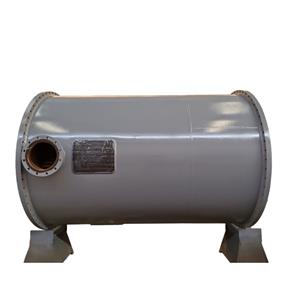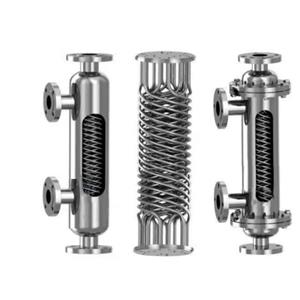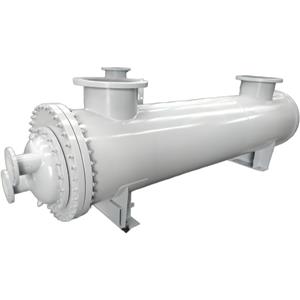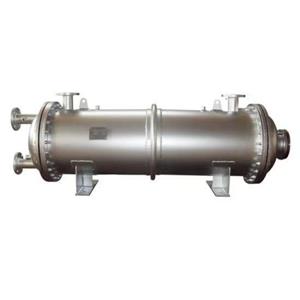
Meet the challenges of the heat exchanger industry through innovation
Compressors, as general mechanical equipment, are widely used in key sectors including air separation, coal chemical, petrochemical, metallurgy, electronics & semiconductors, machinery manufacturing and new energy industries. Heat exchangers are vital core components that ensure safe and efficient compressor operation. Acting as the compressor’s "thermoregulatory system", they safeguard stable equipment performance at all times.
However, compressors vary in structure and working principle across industries, resulting in vastly different requirements for heat exchangers. For a long time, common technical challenges such as low thermal efficiency, high energy consumption, corrosion susceptibility, loud noise and short service life have restricted improvements in overall compressor performance, and remain key research targets for the whole industry.
A heat exchanger manufacturer based in Huangshi, Hubei, drives continuous technological innovation and product iteration through fundamental theoretical research and manufacturing process optimization. In collaboration with Wuhan University of Technology, the factory has successfully developed a novel four-lobed curved vortex generator and anti-clogging perforated petal-shaped turbulator, achieving substantial performance gains in heat transfer efficiency and energy saving.
Rethinking "efficient heat transfer", starting from a single fin
Working Principle of Heat Exchangers The limitation of traditional heat exchangers lies in the static thermal boundary layer formed when fluid flows over heat transfer tubes. Heat transfer efficiency mainly depends on the airflow pattern across fins. Essentially, a heat exchanger enables heat exchange between two fluids of different temperatures (e.g., gas and liquid) through a metal wall. Traditional fins have smooth surfaces. Air adjacent to the fin forms a nearly stationary thermal boundary layer, much like an insulating jacket wrapped around the tubes and hindering heat transfer.
The core function of Difeng’s newly developed four-lobed curved vortex generator and anti-clogging perforated petal turbulator is to continuously generate vortices and break up this thermal boundary layer.
Enhanced turbulence, flow guidance and jet impingement The four-lobed curved structure works like miniature turbine blades to create strong air vortices. The perforated petal design acts as nozzles, accelerating air into high-speed jets that strike the tube surface. Combined, they continuously disrupt the thermal boundary layer on fins for smooth heat transfer.
Improved spiral flow mixing near the wall Instead of flowing linearly, air around the fins moves in tornado-like spiral motion. This thoroughly mixes hot and cold air for uniform temperature distribution and consistent efficiency across the heat exchanger.
Reduced thermal resistance between tubes and fins This design also cuts thermal resistance. Lower thermal resistance means easier heat transfer, better "breathability" of the heat exchanger and further improved overall heat dissipation capacity.
Practical tests verify that these flow optimizations raise the average heat transfer coefficient of the heat exchanger by 10.9%. This technology reaches an internationally advanced level and has won the First Prize of Hubei Provincial Science and Technology Progress Award.
From laboratory to industrialization: continuous progress of the Huangshi heat exchanger cluster
At present, Huangshi heat exchanger factories have widely applied this technology to fin-and-tube heat exchangers. Products serve air separation, coal chemical, petrochemical, metallurgy, new energy and other industries, delivering outstanding performance under harsh working conditions and ensuring efficient, reliable and long-cycle stable operation of compressor units.
The transformation of technology from R&D to commercialization requires sustained investment and accumulation. Constant technical innovation helps overcome technical bottlenecks and achieves remarkable optimization in key indicators such as heat transfer efficiency, flow resistance and manufacturing cost. We provide standardized and customized heat exchanger solutions to customers, delivering tangible and quantifiable value.
At the intersection of cold and heat, the Huangshi heat exchanger industrial cluster serves as the "temperature guardian" of industry through persistent innovation and practical improvements.