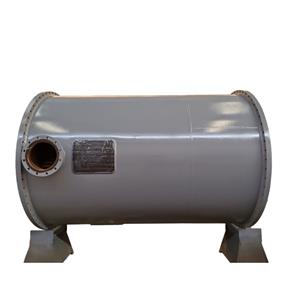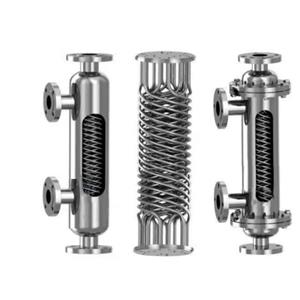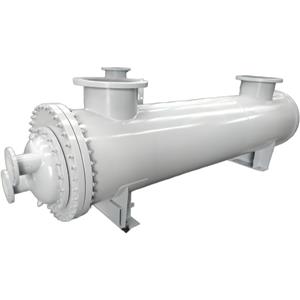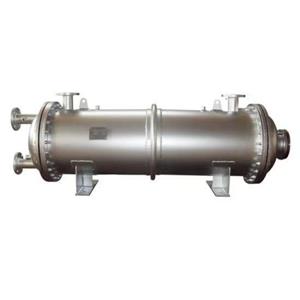
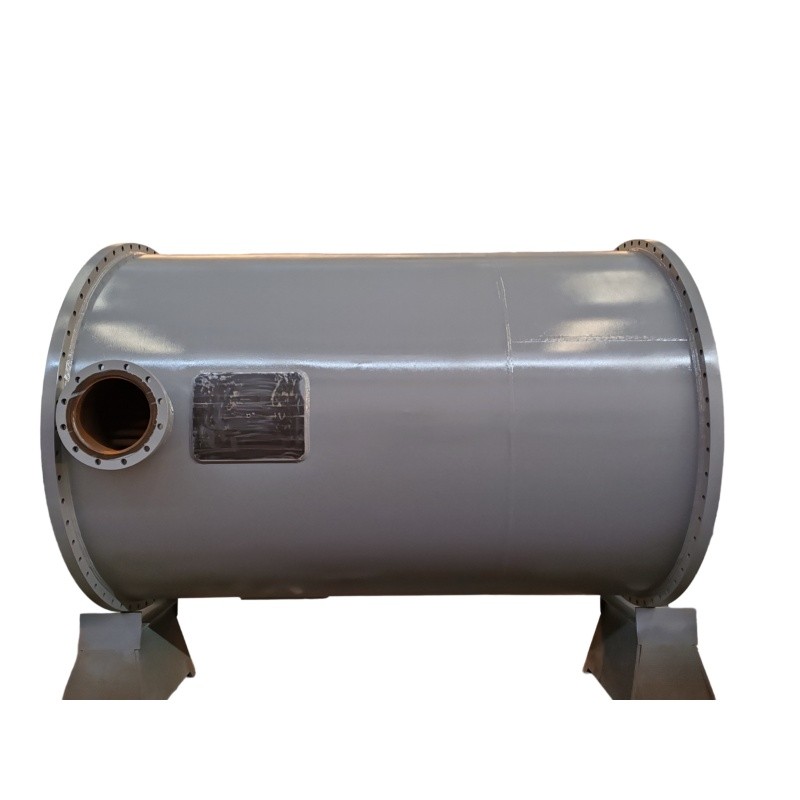
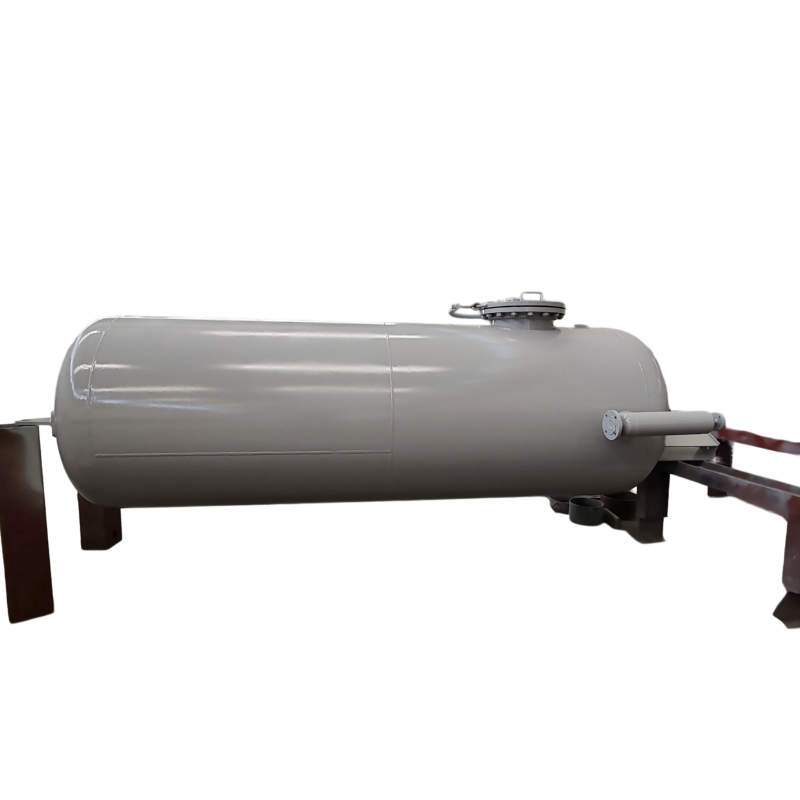
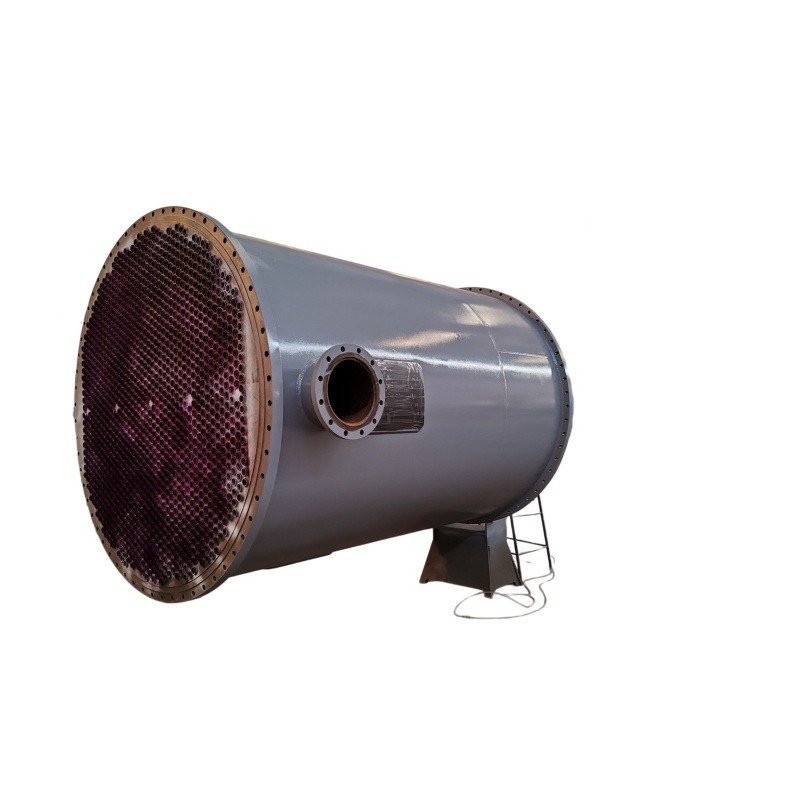
Shell and Tube Condenser Water Air Evaporative Cooled Type

- OEM/ODM
- CHINA
Phase change heat transfer has a very high heat transfer coefficient; it can be achieved through various structures such as shell-and-tube type and fin type.
Condenser Solutions for Corrosive Cooling Water: Shell and Tube, Water Cooled and Air Cooled Condensers for Power, Cold Storage and Petrochemical Plants
Real-World Application Environments
1.Power Generation — Turbine Exhaust Steam Condensation
In thermal and nuclear power plants, multiple condensers operate in parallel to condense exhaust steam discharged from turbines. The Shell and Tube Condenser configuration handles the massive vapor volumes typical of turbine exhaust, converting steam back to liquid condensate for feedwater recovery. The condenser's ability to operate continuously under high vacuum and high flow rates directly impacts plant thermal efficiency and output capacity.
2.Petrochemical Processing — Hydrocarbon Vapor Condensation
In petroleum refining and chemical synthesis, condensers convert hydrocarbon vapors and chemical process streams from gaseous to liquid phase during distillation and reaction processes. The condenser must handle variable compositions, elevated pressures, and potentially corrosive process fluids — making material selection and protective coatings critical to long-term reliability.
3.Industrial Refrigeration — Ammonia and Freon Systems
Large cold storage facilities and food processing plants rely on condensers to reject heat from ammonia or Freon refrigerant circuits. The condenser receives high-temperature, high-pressure superheated vapor from the compressor, cools it at constant pressure, and delivers subcooled liquid refrigerant to the expansion valve. Consistent condenser performance ensures stable evaporator temperatures and prevents compressor overload.
Why Condenser Failure Happens — And How to Prevent It
If you operate a power plant, a petrochemical facility, or a large-scale refrigeration system, condenser downtime is not an inconvenience — it is a direct revenue loss. Based on field data and metallurgical analysis, the majority of premature condenser failures trace back to three specific, preventable root causes:
Pain Point 1: Weld Joint Corrosion at the Tube Sheet
During manufacturing, the welding between the tube sheet and tube bundles is typically performed using manual arc welding. This process inherently produces weld seams with varying degrees of defects — including depressions, porosity, and slag inclusions — while residual stress distribution remains uneven across the joint. When industrial cooling water contacts the tube sheet, impurities, dissolved salts, gases, and microorganisms in the water initiate aggressive corrosion at these vulnerable weld zones. Research confirms that regardless of whether the water source is freshwater or seawater, chloride ion concentration and dissolved oxygen levels are the primary drivers of metal degradation. The complex geometry of the tube sheet further accelerates localized attack, resulting predominantly in pitting corrosion and crevice corrosion. Visually, this manifests as corrosion products, sediment buildup, and bubbles of varying sizes across the tube sheet surface. When seawater is the cooling medium, galvanic corrosion compounds the damage.
Solution: Advanced polymer composite coating technology — widely adopted in Western industrial markets — provides a chemically inert barrier layer over the tube sheet and weld zones. These coatings deliver superior adhesion, thermal resistance, and chemical corrosion resistance, remaining dimensionally stable in sealed environments without shrinkage. Critically, they isolate dissimilar metal contact (eliminating galvanic corrosion pathways) and resist erosive flow, fundamentally preventing corrosion-induced leakage at repaired or vulnerable areas.
Pain Point 2: Inefficient Heat Rejection Under High Ambient Temperatures
Condenser performance is directly governed by the temperature differential between the process fluid and the cooling medium. In regions with elevated ambient temperatures — common across the Middle East and arid climates — air-cooled units face reduced heat dissipation capacity, while water-cooled units must manage higher inlet water temperatures.
Solution: The selection between a Water Cooled Condenser, an Air Cooled Condenser, and an Evaporative Condenser must be based on local water availability, ambient temperature profiles, and total cooling load requirements. Proper sizing — calculated from condensation load and unit-area heat flux — ensures the selected unit maintains adequate heat transfer area without overspending on unnecessary capacity.
Pain Point 3: System Incompatibility and Improper Type Selection
Selecting a condenser type without accounting for local water chemistry, climate conditions, and refrigerant specifications leads to accelerated fouling, reduced COP (coefficient of performance), and premature system failure.
Solution: A systematic selection process — evaluating water source quality, temperature ranges, refrigerant type (ammonia, Freon, hydrocarbons), and installation constraints — ensures the condenser matches the operational environment. The Shell and Tube Condenser remains the dominant choice for high-capacity industrial applications due to its robust heat transfer characteristics and compatibility with a wide range of process fluids.
FAQ
Q1. Can you build a condenser to my duty point, or only standard sizes?
We determine the form and the model from your conditions: total cooling capacity, local water source and temperature, climate, and machine room layout. Heat transfer area is then calculated from the condensation load and unit-area heat load, and the cooling water or air flow and resistance are set accordingly. Send your duty data and we confirm the configuration with engineering calculations.
Q2: Is the Shell and Tube Condenser suitable for seawater cooling applications?
The Shell and Tube Condenser is widely used in seawater-cooled installations, but the tube sheet and tube-to-tube-sheet welds are vulnerable to galvanic corrosion and pitting without protection. Applying a polymer composite protective coating to the tube sheet is the recommended approach to mitigate seawater-induced corrosion and extend service intervals.
Q3: Can the condenser be customised to our available footprint and machine room layout?
Condenser selection explicitly accounts for the total system capacity and the layout requirements of the refrigeration machine room, so dimensional and connection constraints are part of the selection input, not an afterthought. Provide available envelope, nozzle orientations and preferred connection standards; we confirm feasibility against the required heat transfer area before order release.